There’s nothing quite like stepping into the batter’s box. Your heart’s steady but strong, your mind is focused, and everything goes quiet for half a second. It’s just you, the pitcher, and that one pitch that could change the entire momentum of the game. Batting in softball isn’t just a skill, it’s a mindset, a discipline, and honestly, a little bit of an art form. I’ve learned over time that hitting isn’t about luck or even raw strength. It’s built on fundamentals, confidence, timing, and that personal belief that you can and will make solid contact.
In this post, I’m walking you through everything that transforms a hitter from good to great: stance, mechanics, timing, pitch recognition, mental strength, and practice habits. Whether you’re new to softball or looking to level up, batting will always reward the players who put in the work with patience, intention, and heart.
Why Batting Is More Than Just Swinging a Bat
Every hitter starts somewhere nervous, unsure, maybe even afraid of the ball. I’ve been there myself. But the real shift happens when you decide you want to get better and you’re willing to understand what goes on behind a good swing.
Great hitters have 3 things in common:
1. Clean mechanics
2. Consistent timing
3. Strong mental game
They don’t guess. They don’t simply react.
They learn how to predict, adjust, and repeat good habits until hitting feels natural.
And the truth is: anyone can become a powerful hitter with proper training.
Building Your Foundation: The Batting Stance
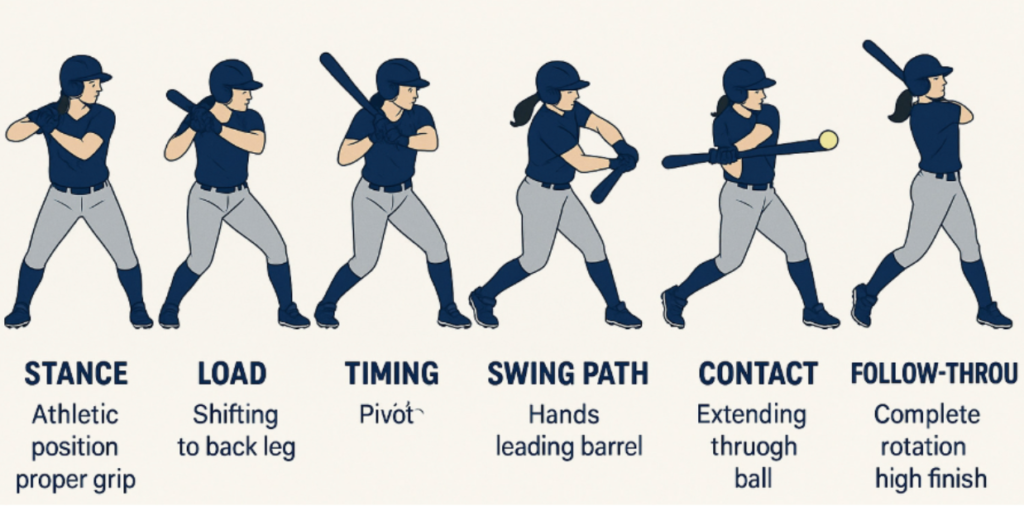
Your stance sets the tone for your entire swing. If your stance is off, your swing will follow.
Here’s what a strong, confident stance looks like:
- Feet shoulder-width apart
This creates balance and allows you to rotate through your hips.
- Knees slightly bent
Soft knees keep you athletic and ready to move.
- Weight slightly on your back leg
About 60%. This is your power base.
- Head still, eyes level
You can’t hit what you can’t see to keep the pitcher in full view.
- Hands relaxed near your back shoulder
Tension slows down bat speed. A loose, controlled grip keeps your swing quick and smooth.
Your stance doesn’t have to look like anyone else’s, but it should always help you feel grounded, confident, and ready.
The Load and Stride
If the stance is your foundation, the load and stride are your ignition switch. They build the momentum that turns into power.
- The Load
Your load is a simple, controlled shift of weight into your back leg. Think of it as coiling a spring small but powerful.
- The Stride
Your stride is not a step, it’s a placement.
Just enough to position your body to fire your hips.
If your stride is too big, you’ll be late.
If it’s too short, you won’t generate power.
A good stride is about the length of your shoe. Controlled. Smooth. Balanced.
Swing Mechanics: The Heart of Great Hitting
Now let’s talk about the swing itself, the part everyone sees but not everyone understands. A powerful, consistent swing isn’t huge or complicated. It’s efficient.
1. Start With Your Hips
Your hips begin the rotation. Not your arms.
This creates torque, the secret ingredient behind explosive contact.
2. Hands Stay Inside the Ball
This keeps your swing compact, fast, and direct.
Casting your hands outward slows you down and causes weak contact.
3. Slight Upward Bat Path
Not a dramatic uppercut, just a clean, controlled upward path that meets the ball out front.
4. Extension Through Contact
After the ball hits the barrel, your arms should extend.
This adds power and sends the ball soaring.
5. Finish High
A strong finish helps your swing stay smooth and complete.
Timing: The Skill That Separates Good from Great
Timing is everything.
You can have perfect mechanics and still miss the ball if your timing is off.
How to improve timing:
- Practice with different pitch speeds
- Track pitches with your eyes before swinging
- Work on front toss and live pitching
- Focus on your stride timing
- Stay relaxed so your body can read the pitch
Great hitters don’t swing fast, they swing on time.

Pitch Recognition
Pitch recognition is what makes a player dangerous at the plate. It involves reading:
- The pitcher’s wrist
- The release point
- The spin of the ball
- The pitch height
- The speed change
The earlier you recognize the pitch, the more control you have over your swing.
Tips to improve this skill:
- Watch the pitcher during warm-up pitches
- Track the ball in your glove hand without swinging
- Do reaction drills
- Train with mixed-speed pitches
- Learn to read spin on rise balls, drop balls, curves, and changeups
The more pitches your eyes see, the sharper your mind becomes.
Building Power the Right Way
A lot of players try to muscle the ball but real power comes from mechanics, not strength alone.
How hitters generate true power:
- Strong leg drive
- Hip rotation
- Good separation between shoulders and hips
- Balanced stride
- Smooth weight transfer
- Strong wrists and forearms
You don’t need to be the strongest player on the field to hit hard. You just need clean, repeatable mechanics.
The Mental Game
I believe hitting is 50% physical and 50% mental, maybe even more mental once you reach competitive softball.
Your mindset determines everything.
What great hitters think:
- “I am prepared.”
- “I trust my swing.”
- “I will make solid contact.”
- “Every at-bat is a new opportunity.”
When you step into that box believing in your training, your swing, and your ability, you’re already halfway to a great hit.
Drills That Transform Hitters
These drills are simple but powerful:
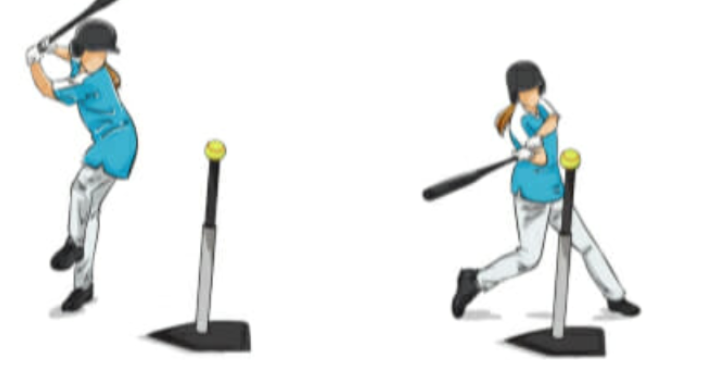
1. Tee Work (Every Pitch Location. High, low, left, right, middle)
Builds muscle memory and consistency.
2. Front Toss
Strengthens timing and rhythm.
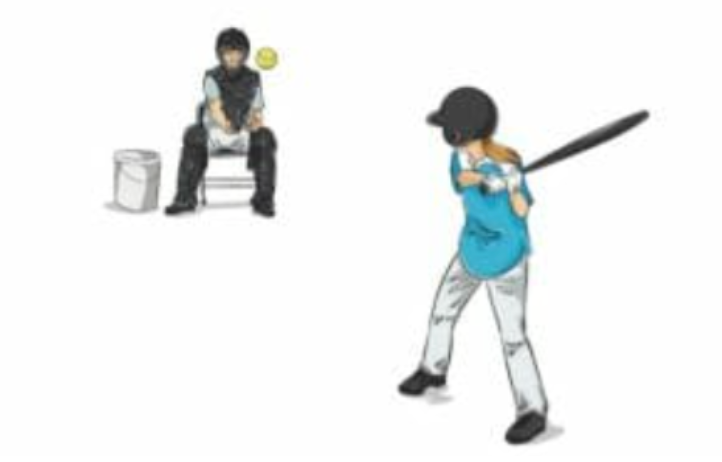
3. Reaction Drills
Improves pitch recognition and fast reflexes.
4. One-Hand Drills
Teaches barrel control and wrist strengths.
5. Walk-Up or Momentum Drills
Trains hip rotation and power.
Drills don’t make you perfect, they make your good habits automatic and get rid of bad habits.
Bringing It All Together
Softball batting isn’t about perfection it’s about progress. It’s about learning what works for you, trusting your body, and showing up with confidence every single time. What makes a great hitter isn’t just talent; it’s discipline, courage, and consistency. When you stand at the plate with strong mechanics, sharp timing, a focused mindset, and belief in yourself, you’re not just swinging a bat, you’re taking control of your moment. These principles didn’t just help me grow as a player; they shaped the way I approach challenges, competition, and even life. Hitting teaches you resilience, patience, and the power of preparation. And with the right training and the right mindset, you can become the kind of hitter people remember, the kind who changes games, shifts momentum, and steps into the box with confidence every single time.