Every hitter wants to hit the ball harder, further, and with more consistency. Whether you are aiming to clear the outfield fence or simply want to drive the ball into the gaps for extra bases, the key metric you should be obsessing over is your exit speed off the bat.
If you want to increase softball exit velocity, you must understand that it is not just about swinging harder or spending hours in the weight room building raw, upper-body strength. While overall strength certainly plays a role, explosive power at the plate is primarily generated through a biomechanical concept known as the kinematic sequence. This means transferring energy efficiently from the ground, up through your hips, into your torso, and finally through the barrel of the bat.
To truly dominate at the plate, you need a training approach that focuses on explosive, efficient movement—which is the foundation of [Iosefo Hitting’s specialized softball instruction]
In this comprehensive guide, we are going to break down the mechanics behind a truly powerful swing, explore the science of energy transfer, and provide you with actionable steps. Let’s dive into the science of how to increase softball exit velocity so you can start dominating at the plate.

Understanding the Kinematic Sequence
The absolute first step to increase softball exit velocity is understanding the kinematic sequence. In simple terms, the kinematic sequence is the precise order in which your body parts accelerate and decelerate during a swing to transfer energy to the softball.
Think of your body as a whip. The handle of the whip (your legs and core) moves first, generating initial momentum. As that lower section stops rotating, the energy transfers to the next section (your torso), and finally cracks out to the tip (the bat barrel).
When this sequence is out of order, you leak massive amounts of power. A hitter who relies purely on their arms and shoulders might look strong, but they are missing out on the massive potential energy stored in their lower half. To truly maximize power, energy must flow sequentially: pelvis, torso, arms, and finally, the bat.
Learning to optimize this energy flow is what separates average hitters from elite power hitters. If you are struggling with this timing, checking out our comprehensive guide on Fastpitch Swing Mechanics is a great place to start adjusting your foundation.

Fastpitch Swing Mechanics: The Foundation of Power
Proper fastpitch swing mechanics are non-negotiable when you want to increase softball exit velocity, and it all starts from the ground up. Ground force is your primary source of power.
By pushing against the dirt effectively during your stride and load phase, you create a reactive force that travels up your legs and into your core. A strong, stable lower half allows you to rotate your hips explosively. Players who “spin” on their back foot rather than driving into a firm, rigid front side lose a significant amount of the force they worked hard to generate.
Focusing on a controlled stride and an aggressive, timely hip rotation will yield immediate improvements in how hard you hit the ball. Break your swing down into phases and ensure your base is locked in before your hands ever start moving forward.
5 Softball Hitting Drills for Power
Implementing the right training routine is essential. You can’t just read about mechanics; you have to feel them. Here are five specific softball hitting drills for power that will help you refine your mechanics and increase softball exit velocity.
1. The Medicine Ball Toss
This drill focuses entirely on the kinematic sequence and hip rotation. Stand in your batting stance holding a medicine ball instead of a bat. Load your back side and explosively toss the ball against a wall, focusing on initiating the movement with your hips rather than your arms. This mimics the exact sequence of a swing without the complexity of aiming a barrel at a moving target. Do 3 sets of 10 tosses to build rotational power.
2. Stride and Separate
To hit for power, your hands need to separate from your body as your front foot lands. This creates “stretch” or torque. Practice striding out while pulling your hands back slightly. Pause when your front foot lands to ensure you are in a strong, stretched position before firing. Many young hitters bring their hands forward as they step, killing all potential power. The stretch across your torso acts like a rubber band; the further it stretches, the harder it snaps back.
3. Heavy and Light Bat Swings
Overload and underload training is fantastic for developing fast-twitch muscle fibers. Swinging a heavier bat builds strength, while swinging a lighter bat trains your nervous system to move faster. Doing a sequence of heavy, light, and normal bat swings is a proven way to increase softball exit velocity over time. Be sure to check out our selection of recommended weighted training bats to equip your training sessions properly.
4. The Stop Swing Drill
Take a normal swing but try to stop the bat completely the exact moment it makes contact with the tee. This forces you to be exceptionally strong at the point of contact. It builds breaking strength in the lead arm and core. If your bat wobbles or you can’t stop it at contact, it’s an indicator of a weak core or improper sequencing.
5. Top Hand Isolations
Using a short bat, hit balls off a tee using only your top hand. Keep your elbow close to your body and drive the knob of the bat inside the path of the ball. A strong top hand is vital for creating backspin, which carries the ball further in the air, preventing you from casting your hands out too early.
While these drills are a great start, the fastest way to see results is through a [personalized hitting evaluation] designed for your specific swing.
Tracking Your Progress
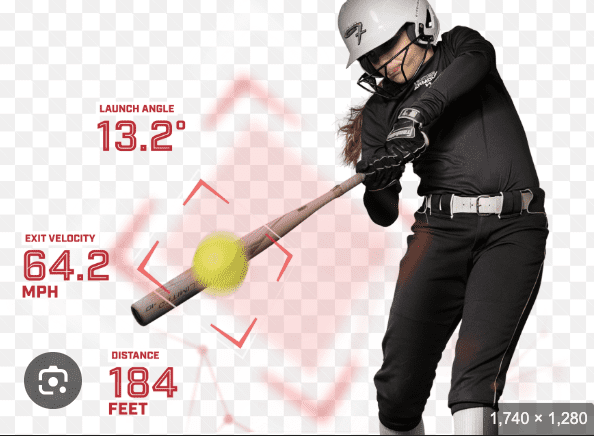
You can’t know if you’ve managed to increase softball exit velocity unless you track it accurately. Investing in a personal radar gun, using smart bat sensors, or hitting at a facility equipped with HitTrax or similar technology is absolutely crucial for modern players.
Set a baseline today by taking 10 to 15 full-effort swings off a tee and recording your average and peak speeds. Re-test yourself every two to three weeks. Seeing the numbers climb will not only validate your hard work in the cages but also keep you highly motivated throughout the long season. Remember, consistency is key, and the data doesn’t lie.
Building a powerful swing is a journey of refining mechanics, improving overall strength, and mastering the kinematic sequence. Learning how to increase softball exit velocity takes time, patience, and the right drills, but the payoff of driving the ball deeper and harder is incredibly rewarding.
Focus on your ground force, practice your hand separation, and don’t neglect your physical mobility. By integrating the five drills mentioned above into your regular training routine, you will start seeing the ball jump off your bat like never before. Don’t wait for the next season to begin your transformation—start your journey to increase softball exit velocity today!
Leave a Reply